Sustainable Gardening: Transforming Your Backyard into an Eco-Haven

Written by Uzair Khan · Founder & Editor
Uzair Khan is the founder of ukbloge, a US-focused publication covering home improvement, personal finance, real estate, and technology. The site name comes from his initials (U.K.). He researches and edits guides to help American readers make confident decisions about their homes, money, and tech.
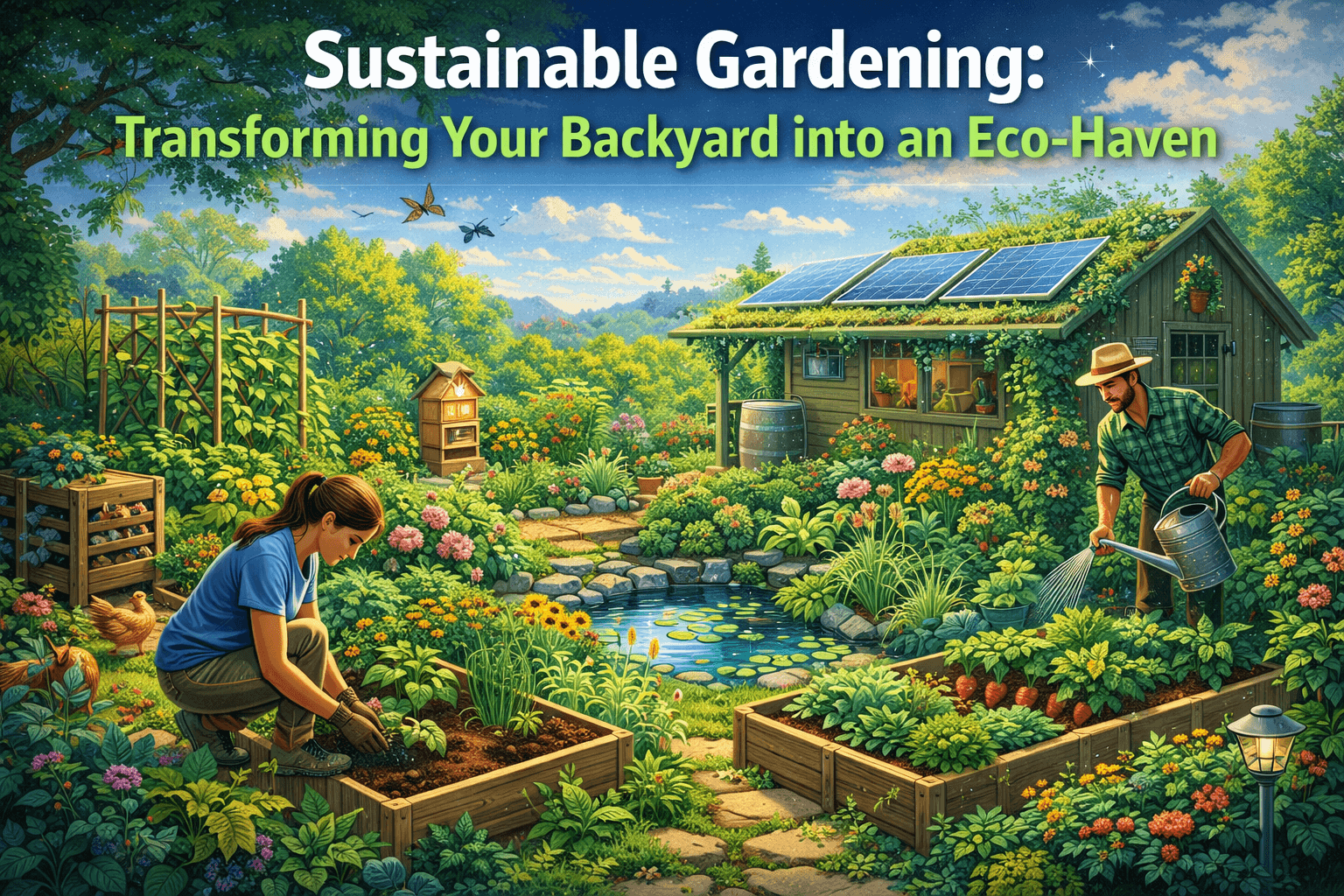
Cultivating Nature: Building a Sustainable Backyard in the United States
When Uzair Khan started converting a standard suburban backyard in California, the first surprise was how much water a conventional lawn consumed—roughly 30–60 gallons per square foot per year in many Western states, according to EPA WaterSense estimates. Replacing even one-third of that turf with native plants cut summer watering by more than half within the first season. Sustainable gardening in the US is not about achieving a magazine-perfect yard; it is about matching your landscape to local climate, soil, and wildlife while spending less on water, chemicals, and maintenance.
This guide walks through practical steps American homeowners and renters can take this year, whether you have a quarter-acre lot in Texas, a townhouse patio in Chicago, or a rental balcony in Seattle.
1. Start With Your USDA Hardiness Zone and Local Soil
Before buying a single plant, look up your **USDA Plant Hardiness Zone** at planthardiness.ars.usda.gov. A plant rated for Zone 9 will struggle in a Zone 5 Minnesota winter, no matter how attractive the nursery display looks.
Next, order a soil test through your **county Cooperative Extension office** (find yours at extension.org). Most US counties offer basic tests for $15–$30. The report tells you pH, nitrogen, phosphorus, and potassium levels so you amend precisely instead of guessing with generic fertilizer.
2. Choose Native and Regional Plants
Native species evolved with your rainfall, pests, and pollinators. Examples by region:
- **Northeast / Midwest:** Purple coneflower (Echinacea), wild bergamot, serviceberry shrubs
- **Southeast:** Coral honeysuckle, beautyberry, switchgrass
- **Southwest:** Desert marigold, agave, penstemon varieties suited to low rainfall
- **Pacific Northwest:** Oregon grape, red-flowering currant, sword fern
The Lady Bird Johnson Wildflower Center (wildflower.org) maintains searchable native plant lists by state. Big-box stores often stock generic ornamentals; local native nurseries and extension plant sales usually offer better regional fit.
3. Rethink the American Lawn
Roughly 40 million acres of US land are lawn, per EPA estimates—an ecological monoculture that demands mowing, fertilizing, and irrigation. You do not need to eliminate grass overnight:
- **Reduce, don't rip out everything:** Replace unused strips along fences or side yards with clover, native groundcover, or mulch paths
- **Raise the mower blade:** Cutting at 3–3.5 inches shades soil, reduces weed pressure, and improves drought tolerance
- **Leave the leaves:** Shredded fall leaves become free mulch and feed soil organisms
- **Tolerate early-season "weeds":** Dandelions are among the first nectar sources for bees in many US climates
Check whether your HOA or city has landscaping rules before making visible changes. Some municipalities now offer **turf replacement rebates**—search your water utility's website for programs in California, Nevada, Colorado, and other drought-affected states.
4. Water Smarter (and Stay Legal)
Outdoor irrigation accounts for roughly 30% of household water use nationwide, and far more in arid regions. Practical upgrades:
- **Drip irrigation** delivers water to roots with minimal evaporation; many utilities rebate controllers and rotors
- **Rain barrels** are legal in most US states but regulated in others (Colorado historically restricted collection; check current state law)
- **Rain gardens** capture roof runoff in a shallow depression planted with deep-rooted natives—reducing stormwater entering municipal systems
- **Smart controllers** tied to local weather skip watering after rain automatically
In the West, understand your water district's **tiered pricing** and seasonal restrictions before planning expansions.
5. Build Soil Without Synthetic Chemicals
Healthy soil stores carbon, holds moisture, and supports pest-eating insects:
- **Compost** kitchen scraps and yard waste; EPA estimates food scraps make up about 24% of municipal landfill waste
- **Mulch** beds with 2–3 inches of wood chips, straw, or leaf litter to cut evaporation up to 70% in hot months
- **Avoid routine pesticide sprays** that kill beneficial insects along with pests; try hand-picking, row covers, or targeted neem oil first
6. Support Pollinators and Birds
The US has lost significant pollinator habitat to development and pesticide use. Small yards still help:
- Plant **three species blooming per season** (spring, summer, fall)
- Leave a small brush pile or unmowed corner for shelter
- Skip systemic insecticides on flowering plants
- Add a shallow water dish with stones for bees and butterflies
Register your yard with the National Wildlife Federation's Certified Wildlife Habitat program if you meet food, water, cover, and nesting criteria—it is a useful checklist even if you do not apply for certification.
7. A Realistic First-Year Budget (US)
Typical DIY costs for a starter sustainable garden:
- **Soil test:** $15–$30 via your county extension office
- **Drip irrigation kit (small bed):** $40–$80, or use a soaker hose for less
- **Native plants (10):** $50–$150; extension plant sales are often cheapest
- **Mulch (one cubic yard):** $30–$50; many cities offer free wood chip delivery
- **Rain barrel:** $80–$150; utility rebates may offset the cost in drought-affected states
Start with one bed or one side of the yard. Measure results for a full growing season before expanding.
Conclusion: Small Yards, Real Impact
Sustainable gardening is one of the most accessible environmental actions US homeowners can take. You do not need acreage or a master gardener certificate—just plants suited to your zip code, less lawn, healthier soil, and water habits that match your climate. Every native flower and every gallon of water saved contributes to a yard that works with nature instead of against it.
Sources and Further Reading
- EPA WaterSense — Outdoor water use tips: epa.gov/watersense
- USDA Plant Hardiness Zone Map: planthardiness.ars.usda.gov
- Cooperative Extension System: extension.org
- Lady Bird Johnson Wildflower Center: wildflower.org
- National Wildlife Federation — Garden for Wildlife: nwf.org/Garden-For-Wildlife